


1. Identify the KPIs that actually matter to you.
Common metrics like customer satisfaction, average ticket time, and monthly recurring revenue are a good start, but the right KPIs depend on where your business is actually struggling. Ask your team and your clients where the friction is, then measure that.
2. Build a system to track them consistently.
KPIs are only useful if you're tracking them the same way, every time. A PSA that automatically captures ticketing, time, and billing data removes the guesswork (and the manual spreadsheet work).
3. Actually use the data to make decisions.
Tracking customer satisfaction should inform where you improve service. Tracking SLA compliance should inform staffing and workflow changes. Data that just sits in a dashboard isn't doing its job.
4. Choose tools that show you the full picture.
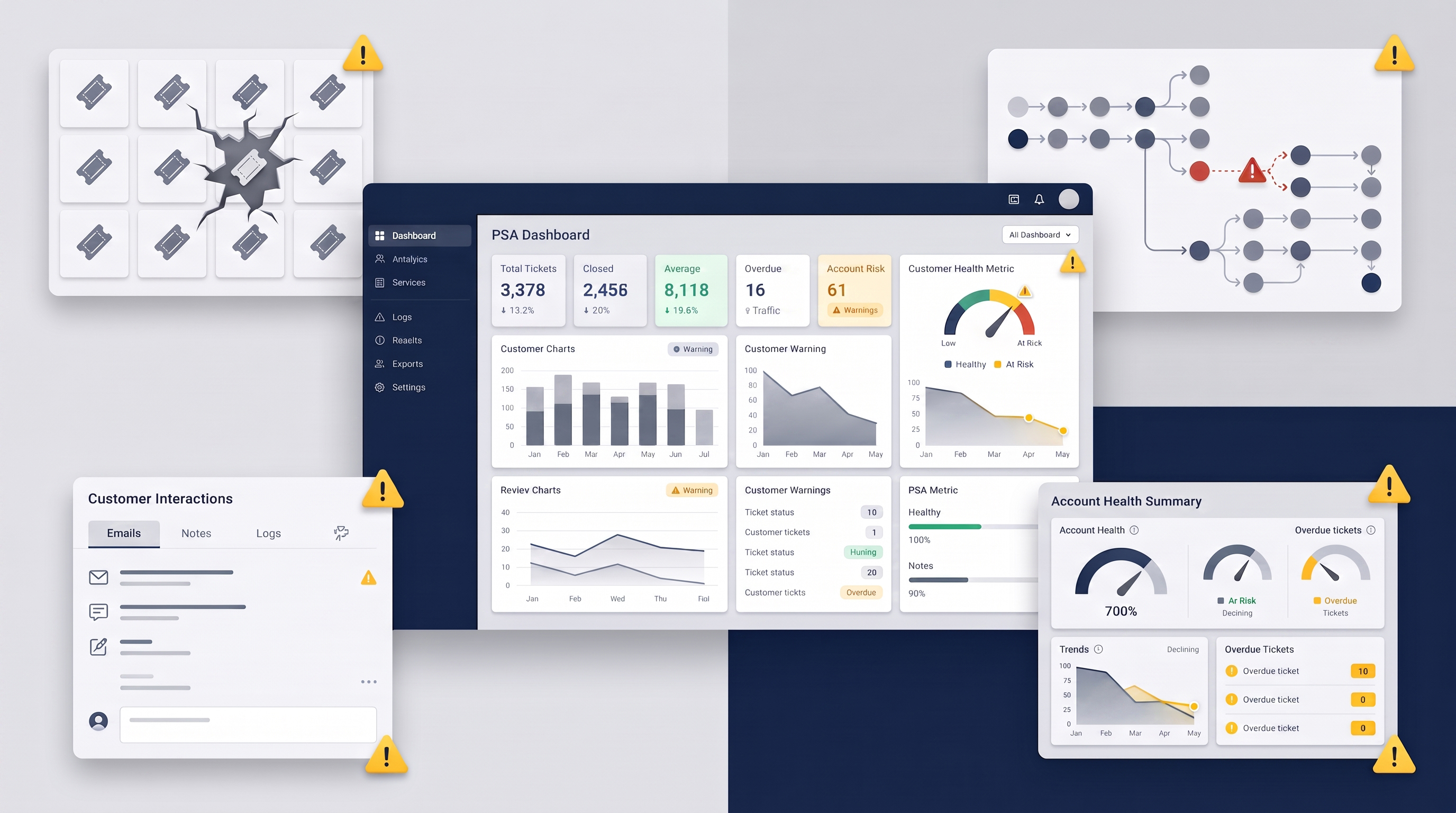
Not every PSA gives you a high-level view of the business. Many just track individual tickets. Look for a platform that connects customer interactions, project data, and financials into one view.
See Your Business Clearly With Zest
Zest gives owners and managers visibility into client health, technician utilization, service margin, and MRR trend without needing to build a reporting function from scratch.
.jpg)